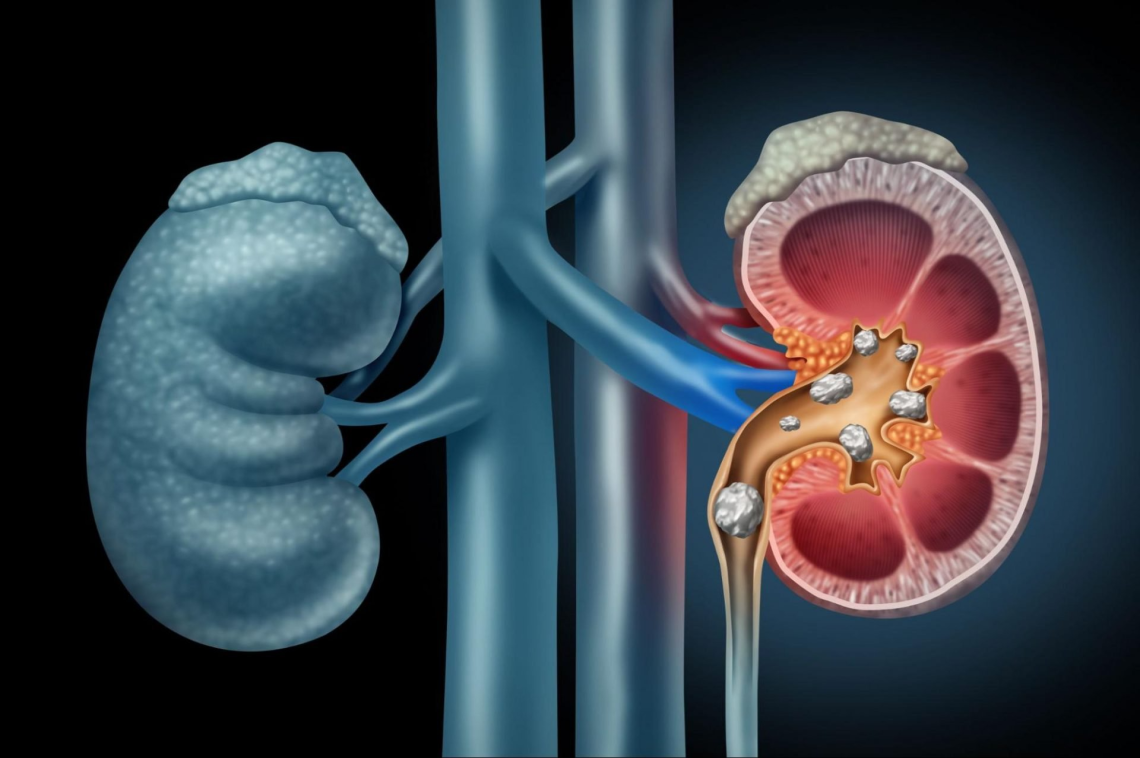
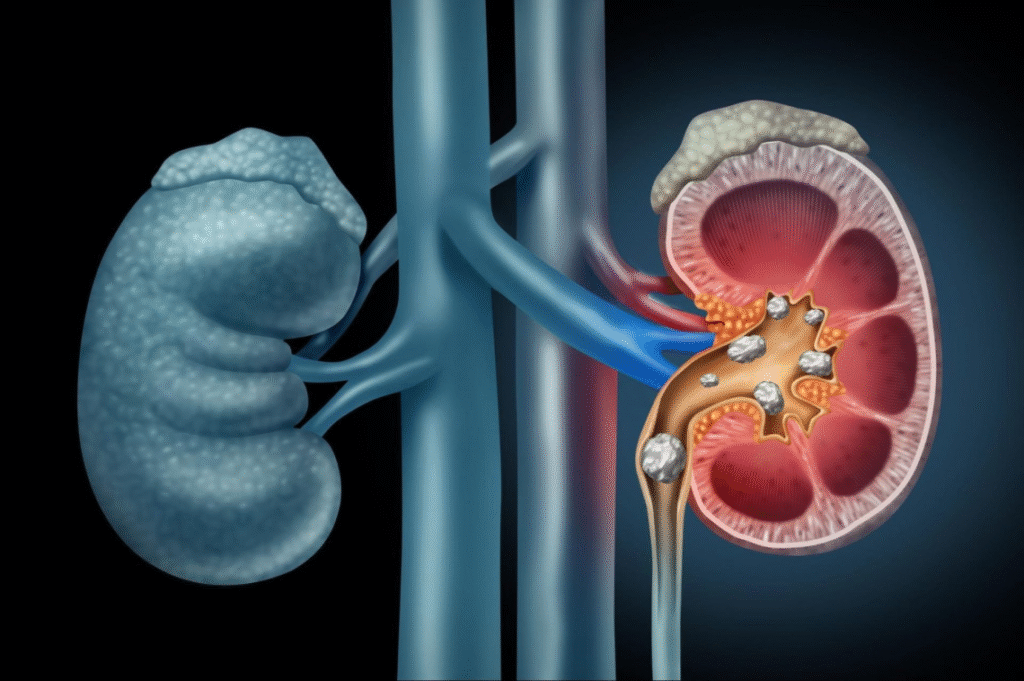
Kidney stones are hard mineral deposits that form in the urinary tract when urine becomes concentrated. They vary in size-from a grain of sand to a golf ball-and can cause excruciating pain if they obstruct the ureter. Stones are common in hot climates like Chennai because dehydration and dietary factors contribute to concentrated urine.
Causes / risk factors
- Not drinking enough water, especially in hot weather
- Diets high in sodium, sugar or animal protein
- High oxalate foods (spinach, nuts, chocolate) and purine‑rich foods (red meat, organ meats)
- Family history and genetic predisposition
- Metabolic disorders (hyperparathyroidism, gout) and certain medications
Symptoms
- Sharp, cramping pain in the back or side that may radiate to the lower abdomen or groin
- Pain or burning during urination
- Pink, red or brown urine (hematuria)
- Frequent urination, nausea, vomiting and fever if infection is present
- Constant urge to urinate despite little output
When to seek help / emergency signs
- Sudden severe pain that doesn’t improve with rest or medication
- Blood in urine or difficulty passing urine
- Fever, chills, nausea or vomiting accompanying pain
- Inability to urinate or passing only small amounts despite intense urges
- Kidney stones in people with one kidney, diabetes or pregnancy
Diagnosis
We perform urine analysis and blood tests to check kidney function and identify crystals or infection. Imaging studies (non‑contrast CT scans, ultrasound or X‑rays) show the size, location and type of stone. For recurrent stones, metabolic evaluation helps identify underlying conditions and dietary contributors.
Treatment options
Our approach depends on stone size, location and composition:
- Hydration and medical therapy – For small stones, drinking 2–3 litres of water daily, taking pain relief and medications like alpha blockers to relax the ureter may help pass the stone.
- Shockwave lithotripsy (SWL) – Uses sound waves to break stones into tiny fragments that can be passed naturally.
- Ureteroscopy and laser lithotripsy – A thin scope is passed through the urinary tract; laser energy pulverises the stone and fragments are removed.
- Percutaneous nephrolithotomy (PCNL) – A keyhole procedure where a small incision in the back allows access to the kidney; an ultrasonic or laser probe breaks and removes large stones. We offer mini‑PCNL for a smaller incision and quicker recovery.
- Robotic‑assisted stone surgery – Used for complex or recurrent stones requiring simultaneous reconstruction or when anatomical variations make standard approaches challenging.
Prevention / aftercare
Drink plenty of water throughout the day, especially in Chennai’s heat. Limit salt, animal protein and added sugars. Include calcium‑rich foods but avoid excessive supplements. Reduce oxalate‑rich foods like spinach and nuts if prone to calcium oxalate stones. Maintain a healthy weight and follow any prescribed medications (e.g., potassium citrate). Regular follow‑ups with imaging ensure early detection of new stones.